Contact

Mechanical seals
Discover our range of single, double, cartridge, or split mechanical seals, offering reliable sealing for numerous industrial applications. Their robust design and manufacturing quality ensure durable performance on pumps, agitators, mixers, and other rotating equipment, even in the most demanding environments.
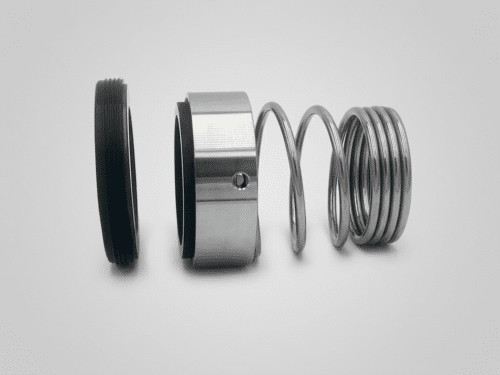
Mechanical Seal Compatible with KSB Pumps: ETANORM, ETABLOC, ETACHROM

Mechanical Seal Compatible with APV Pumps: with Flush W20/20, W25/75, W30/25, W30/50, W40/20, W50/25 & with Flush W30/100, W50/50, W50/100, W60/300, W70/30, W80/50, W100/130

Mechanical Seal Compatible with JOHNSON Pumps: TOPWING TW2

Mechanical Seal Compatible with FLYGT Pumps: FTC 20, FTC 25, FTC 35, FTC 45, FTC 60, FTC 90

Mechanical Seal Compatible with VICKING Pumps: G 432 / G 745 / GG 475

Mechanical Seal Compatible with JOHNSON Pumps: CLASSIC IC
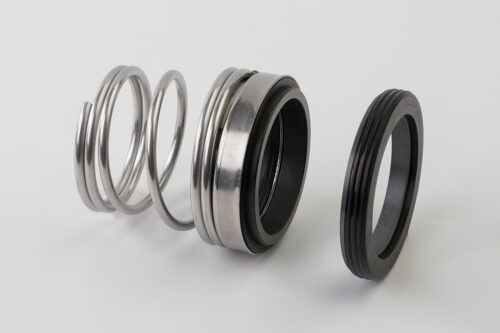
Mechanical Seal Compatible with PACKO Pumps: PO1, PO2, PO3

Single-effect cartridge mechanical seal for crystallizing or vaporizing fluids

Process Mechanical Seal (O.E.M.)

Mechanical Seal Compatible with EMU-Type Pumps

Mechanical Seal Compatible with ABS Pumps: AFP Series

Mechanical Seal Compatible with GRUNDFOS, SARLIN and HILGE Pumps

Mechanical Seal Compatible with ABS Pumps: AFP Submersible Pumps
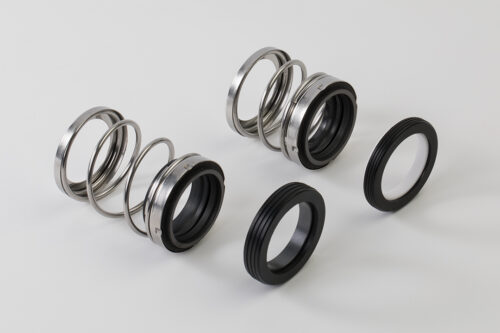
Process Mechanical Seal (O.E.M.)

Mechanical Seal Compatible with GRUNDFOS Pumps: CNP, SPERONI
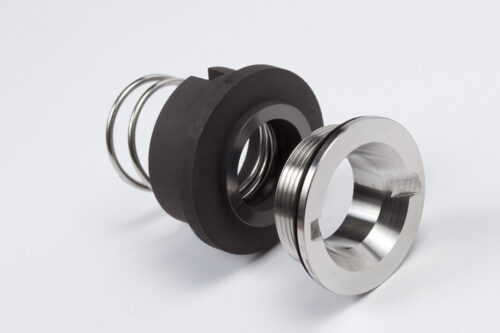
Mechanical seal compatible with process pumps ALFA LAVAL : CM 1, 1A, 1B, 1C, 1D, GM 1, 1A, 2, 2A. EM 1C, EM 1D

Mechanical Seal Compatible with SALMSON Pumps: LI-10615, LI-10625, LI-10858

Complete balanced mechanical seal for high-temperature applications

Replacement kit for B24 mechanical seal

Dynamic sealing with balanced complete mechanical seal
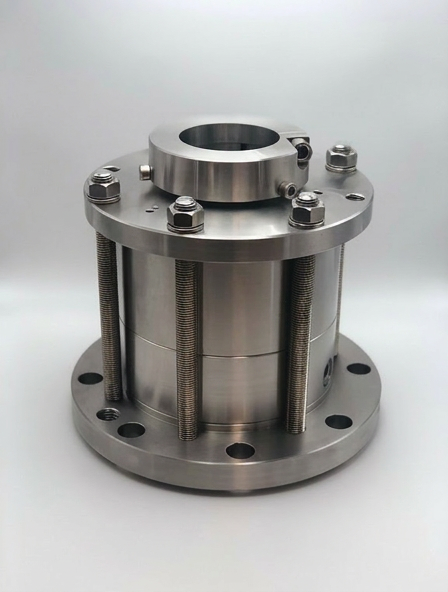
Optimized stainless steel top-entry sealing system up to 8 bar

Process Mechanical Seal (O.E.M.)

Mechanical Seal Compatible with JOHNSON Pumps: TL, TOPLOBE
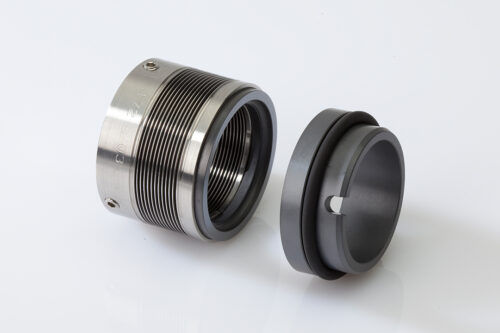
Complete balanced mechanical seal for very high-temperature applications
1 - 24 on 121 results

Advantages of Mechanical seals LATTY
- Wide range of single, double, cartridge, or split seals
- Increased equipment lifespan by protecting shafts and pumps against wear.
- Simplified Maintenance with easy-to-install and replace models.
- Reduced Maintenance costs thanks to improved longevity and less frequent interventions.
- Compatible with numerous industrial applications
- Optimized Performance even under demanding operating conditions.
- Technical support for the selection and implementation of solutions
Mechanical seals: the principle of dynamic sealing
A mechanical seal is an assembly composed of two sub-assemblies ensuring sealing between a rotating part and a stationary part. It is primarily used to seal shafts of pumps, agitators, mixers, and many other industrial equipment.
The operating principle is identical for all mechanical seals: to ensure sealing between two moving faces thanks to an extremely thin liquid film called primary sealing.
This film, maintained by the rotation of the equipment, comes either from the fluid conveyed by the machine or from an auxiliary fluid. A very small quantity of this film may escape outside the friction faces: this controlled leakage corresponds to the normal consumption of the mechanical seal.
The friction generated at this film produces heat, which is dissipated by the surrounding fluid. To ensure optimal service life of the friction faces, this film must remain stable and in a liquid state. To prevent vaporization, the fluid pressure at the faces must be sufficient.
The different mechanical seal technologies
Depending on the operating conditions and the nature of the fluid to be sealed, several technologies can be used:
- Liquid-lubricated mechanical seals: The friction faces are lubricated directly by the process fluid or by an auxiliary fluid to ensure cooling and lubrication.
- Dry mechanical seals: Also known as unlubricated or contacting mechanical seals, they are used in certain specific applications where liquid supply is not possible.
- Gas mechanical seals: These seals operate without contact between the faces thanks to a gas film, limiting friction and wear.
Depending on requirements, seals can be offered as bi-component or cartridge types. They can also be balanced (B) or unbalanced (U) depending on the pressure levels encountered.
Secondary sealing is provided by O-rings, elastomeric bellows, or welded or hydroformed metal bellows. Depending on the design, various complementary elements can be associated with the seal: sleeves, flanges, covers, drive rings, or specific adaptation parts.
How to choose a mechanical seal?
The selection of a mechanical seal is based on several operating parameters that must be analyzed jointly.
- The fluid to be sealed: The nature of the fluid is an essential criterion. It is particularly important to consider: its abrasiveness, corrosivity, viscosity, volatility, toxicity, pH, concentration, the possible presence of crystals or suspended solids, and pressure.
- Operating pressure helps determine the type of seal to use: Unbalanced seal (U) for pressures generally below 10 bar, balanced seal (B) for pressures above 10 bar.
- Rotational speed: A mechanical seal must remain stable at the machine’s operating speed. Geometric defects in the equipment can significantly influence the behavior of the film between the friction faces. For high speeds, generally above 20 m/s, stationary seals are often preferred because they are less sensitive to centrifugal effects.
- Temperature: All components of the mechanical seal must retain their properties across the entire operating temperature range. The choice of materials for the friction faces, secondary seals, and metallic components directly depends on this parameter.
The materials of the friction faces
The materials constituting the friction faces are selected based on their mechanical, thermal, and chemical characteristics, as well as their ability to function together under optimal lubrication conditions. Depending on the applications, mechanical seals can be equipped with faces made of Silicon carbide, tungsten carbide, graphite, or carbon to achieve the expected Performance in terms of service life and reliability.
Example of LATTY codification
LATTYseal B 24610 U6 U6 V4 = mechanical seal type 24610 balanced (B) with friction face in pure Silicon carbide (U6) / pure Silicon carbide (U6) and FPM FDA seal (V4)

Frequently asked questions about Mechanical seals
What fluid is to be sealed by the mechanical seal?
It is necessary to know the characteristics (abrasive, corrosive, volatile, etc.) and additional information about the fluid such as its chemical formula, concentration, density, composition in case of mixture, crystals and solids, toxicity, corrosivity (pH), volatility (vapor pressure), and viscosity.
What is the pressure exerted on the mechanical seal?
This indication is necessary to select a balanced seal (B) > 10 bar or an unbalanced seal (U) 10 bar.
What is the rotational speed of the mechanical seal?
A mechanical seal must be dynamically stable at its rotational speed. Geometric defects in the machine (e.g., coaxiality defects of the stator relative to the rotor) lead to an unstable interface film at high speeds. Above 20 m/s, the choice will be for stationary mechanical seals, which accept more geometric defects as they are not subjected to centrifugal forces. To avoid generating heat and promote the film at the interface, the choice of materials is linked to the speed.
What is the operating temperature of the mechanical seal?
All components of the mechanical seal must maintain their integrity across the entire operating temperature range.
Are approvals, standards, or directives required by the client?
Our mechanical seals can be supplied with FDA, CE 1935/2004, WRA, or ATEX approvals, standards, or directives.
Evolution of CE 1935/2004 standard following the entry into force of the decree of August 5, 2020
As part of our commitment to quality and safety, we ensure that all seals integrated into our equipment comply with the requirements of the Decree of August 5, 2020, relating to rubber materials and articles intended to come into contact with foodstuffs.
Since July 1, 2025, new restrictions concerning the use of certain substances in elastomers, particularly EPDM and FKM/Viton, have come into effect. To anticipate and guarantee full compliance with this regulation, GROUPE LATTY has deployed adapted solutions to meet the requirements of this decree.
Why choose LATTY solutions?
French manufacturer for over 100 years
A comprehensive offering adapted to the constraints of each industry
Reduced wear and extended equipment lifespan
Technical support from specialists
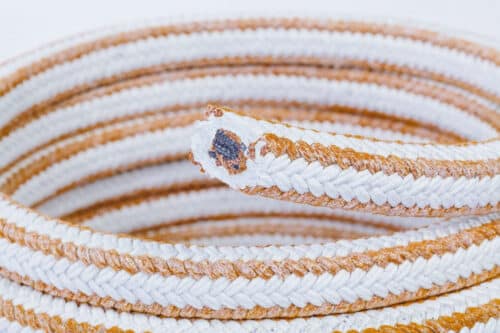
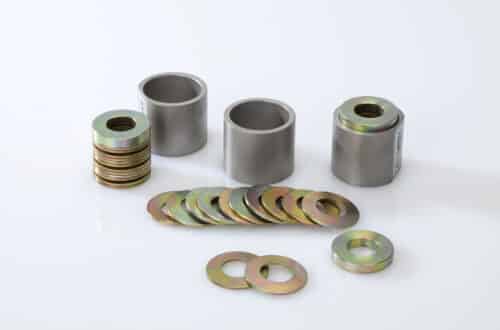
Other sealing product categories
Browse our main families of sealing products, developed to meet the needs of industrial operators across all markets and constraints.



Services to support your industrial projects
Beyond products, GROUPE LATTY supports industrial clients at every stage of their projects, from solution selection to implementation and long-term monitoring.